
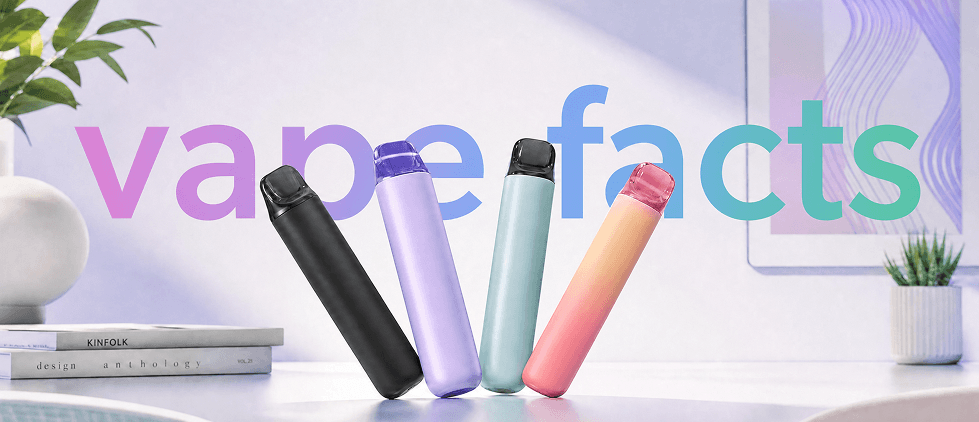
Most people think they understand vaping. They're usually wrong.
Whether you've heard that vape aerosol is "just water vapor," that nicotine causes cancer, or that vaping is completely safe, there's a good chance at least one of those things you believe about e-cigarettes isn't quite right. The science is more complicated, more nuanced, and frankly more interesting than the internet would have you believe.
This isn't another generic "is vaping bad?" article. Think of it as a fact vault: a deep-dive into the statistics, research findings, and persistent myths that shape how we talk about vaping in 2026. We've pulled data from the CDC, WHO, FDA, JAMA Network Open, and multiple peer-reviewed studies to give you the clearest possible picture.
Here's what the research actually says.
TL;DR: Key Vape Facts at a Glance
-
Vaping is generally considered less harmful than combustible cigarettes, but that does not mean harmless.
-
Most vape products contain highly addictive nicotine; nearly 99% of US retail e-cigarettes do.
-
Youth vaping has declined sharply from its 2019 peak but over 1.63 million US students still vape regularly.
-
Vape aerosol is not "just water vapor" — it contains chemicals, heavy metals, and ultrafine particles.
-
Long-term health effects are still being studied; many unknowns remain, especially for young users.
-
Nicotine salts changed the game. They allow much higher nicotine concentrations with less harshness.
-
Switching completely from cigarettes to regulated vaping products can reduce exposure to certain carcinogens by over 90%.
-
As of 2026, roughly 7.2% of US adults vape (nearly double the 2020 figure), while traditional smoking has dropped to a historic low of 9.9%.
Check out vapejuice.com for a full pack of vaping products.
Quick Stats Snapshot
|
Vape Statistic |
Data Point |
|---|---|
|
Global vapers worldwide |
100+ million (WHO) |
|
US adults who currently vape |
~7.2% / approx. 20 million |
|
US students currently vaping |
1.63 million (2024 NYTS) |
|
Youth choosing flavored products |
87.6% |
|
Youth using disposable devices |
55.6% |
|
Daily teen vapers (among current users) |
26.3% |
|
US adults vaping daily |
~45% of current vapers |
|
Cigarette smokers in the US (2026) |
9.9% (historic low) |
|
Vaping cessation vs. NRT success rate |
~50% more effective than patches/gum |
|
Carcinogen reduction vs. smoking |
Over 90% reduction (exclusive switchers) |
What Is Vaping, Exactly?
Before we get into the facts people get wrong, it helps to make sure we're all talking about the same thing. "Vaping" has become a catch-all term that covers several distinct products, and conflating them is one reason the public conversation gets muddled so easily.
How Vape Devices Work
All electronic cigarettes share the same basic architecture: a battery, a heating element (called an atomizer or coil), a reservoir of e-liquid, and a mouthpiece. When you draw on the device, the battery activates the coil, which heats the e-liquid to a temperature that turns it into an aerosol. That aerosol is what gets inhaled, and it is emphatically not steam.
The e-liquid itself is typically a mix of propylene glycol (PG), vegetable glycerin (VG), flavorings, and, in most cases, nicotine. The ratio of PG to VG affects throat hit and vapor density. The type and concentration of nicotine affect how quickly it's absorbed and how addictive the product is.
Shop vape starter kits on vapejuice.com.
Vape vs. E-Cigarette vs. Disposable Vape
E-cigarette is the umbrella term used in most scientific literature and by health agencies. Vape is the consumer term for the same thing, though it's increasingly used to refer specifically to larger mod-style devices. A disposable vape is a pre-filled, non-rechargeable device designed to be thrown away once the e-liquid or battery runs out.
These distinctions matter because the device type shapes the nicotine delivery, the user demographic, and the risk profile. A refillable mod used by a 45-year-old former smoker has a very different use case than a fruit-flavored disposable marketed through social media.
Why Vaping Became So Popular So Quickly
JUUL's arrival in 2015 (with its sleek USB-stick design, high-concentration nicotine salts, and school-hallway-friendly discretion) is widely credited as the inflection point. But the boom truly exploded with the rise of disposable devices around 2020. Suddenly, vaping required no setup, no maintenance, and no upfront hardware cost. Combined with algorithmically amplified social media content and an almost infinite variety of candy, fruit, and dessert e-cigarette flavors, the conditions were perfect for rapid mainstream adoption.
|
Device Type |
Reusable? |
Nicotine Level |
Market Share (2026) |
Popular Audience |
|---|---|---|---|---|
|
Disposable vapes |
No |
Very high (nicotine salts) |
~60% of sales |
Teens & young adults |
|
Pod systems (cartridge-based) |
Yes |
Moderate to high |
28–34% of sales |
Former smokers |
|
Open/refillable mods |
Yes |
Variable (user-controlled) |
10–20% of sales |
Hobbyists & long-term users |
Shop e-juice flavors on vapejuice.com.
The Biggest Vape Facts People Should Know
This is the core of what most people get wrong. Some of these will surprise anti-vaping advocates. Some will surprise vaping advocates. That's the point.
Fact #1: Vape Aerosol Is Not Water Vapor
Vape aerosol contains nicotine, heavy metals including lead and nickel, ultrafine particles, and volatile organic compounds. Calling it "water vapor" is one of the most persistent and dangerous misconceptions in the entire vaping debate. The "just vapor" myth likely stems from the fact that the aerosol is visible and dissipates quickly, unlike cigarette smoke, which lingers and smells. But quick dissipation doesn't mean harmless.
Studies have detected formaldehyde, acrolein, acetaldehyde, and various heavy metals in vape aerosol, particularly when devices are used at higher power settings or when coils are old. That said, concentrations of most toxicants are significantly lower than in cigarette smoke, which is why the less harmful than smoking argument has scientific backing, even if harmless does not.
Fact #2: Some Vape Pods Contain Extremely High Nicotine Levels
Nicotine salt formulations can deliver 50mg/mL or higher levels that traditional freebase nicotine would make unpleasantly harsh to inhale, enabling highly efficient nicotine delivery with a smooth throat hit. Nicotine salts pair nicotine with an acid and went mainstream around 2016, fundamentally changing the vaping landscape. They allow devices to deliver nicotine to the bloodstream much more rapidly than freebase formulations, more closely mimicking the spike associated with combustible cigarettes.
This is a significant factor in their effectiveness as a cessation tool. Over 62% of vapers worldwide now use nicotine salt formulations, and they appear in more than 44% of all new product launches in the US market.
Check out our nicotine salts range.
Fact #3: Flavored Vapes Dominate Youth Usage, by a Wide Margin
87.6% of youth e-cigarette users have recently used a flavored product, with fruit being the #1 flavor at 62.8%, followed by candy/desserts (33.3%) and mint (25.1%). Flavor availability is consistently one of the top ten reasons teens report trying e-cigarettes, per the CDC. This isn't a coincidence; it reflects deliberate product design. Certain flavor chemicals used in e-liquids were originally developed for food manufacturing, not for inhalation, and when inhaled repeatedly, their safety profile is simply unknown in many cases. State and local flavor bans have produced mixed results. A national survey published in the Nicotine & Tobacco Research found that approximately 12.5% of exclusive vapers in the UK switched to combustible tobacco after real-world flavor restrictions, an unintended consequence that health authorities continue to grapple with.
Fact #4: Vaping Trends Exploded Because of Disposables
The modern disposable vape is almost unrecognizable compared to its 2018 predecessor. Early disposables offered around 300 puffs. Today's top-selling devices offer between 5,000 and 15,000 puffs, with rechargeable batteries, mesh coils, and nicotine salt formulations packed into a device smaller than a highlighter. This engineering leap, combined with aggressive social media marketing and a flavor catalog that reads like a dessert menu, is what drove disposables to claim nearly 60% of all US e-cigarette sales by early 2026.
Among youth vapers, disposables are even more dominant: 55.6% of young e-cigarette users report using them, compared to 15.6% using pod systems and just 7% using mods or tanks.
Shop our full range of disposable vapes on vapejuice.com.
Fact #5: The Long-Term Effects Are Still Unknown
Vaping at scale is roughly a decade old. Cigarettes have been studied for over a century. The honest answer to "what does vaping do to your body long-term?" is: we don't fully know yet. Longitudinal data is still being collected, and the devices people vape today are significantly different from the ones studied in research from five years ago.
What we do know: exclusive vaping reduces exposure to tobacco-specific carcinogens by over 90% compared to combustible cigarettes. What we don't know: whether a decade of daily vaping at modern nicotine concentrations produces health outcomes we haven't anticipated yet.
Fact #6: Vaping Can Expose Users to Heavy Metals and Chemicals
Multiple peer-reviewed studies have detected concerning compounds in vape aerosol, including:
-
Formaldehyde (a known carcinogen, produced at higher power settings)
-
Acrolein (an irritant linked to cardiovascular disease)
-
Lead, nickel, and chromium (from metal heating coils)
-
Ultrafine particles (which penetrate deep into lung tissue)
-
Diacetyl (a flavoring chemical linked to a serious lung condition in some occupational studies)
Concentrations vary enormously by device type, power level, e-liquid composition, and user behavior. The risks are real but not uniform, and in most cases, still significantly lower than the established risks of combustible tobacco.
Vaping Myths vs. Facts
This is where the internet gets things most wrong, on both sides of the debate. Here's a clean breakdown.
|
Myth |
Fact |
|---|---|
|
"Vaping is just harmless steam." |
Vape aerosol contains nicotine, heavy metals, ultrafine particles, and volatile compounds. "Harmless" and "steam" are both inaccurate. |
|
"Nicotine causes cancer." |
Nicotine is highly addictive but not the primary carcinogen in tobacco products. The combustion of tobacco (producing tar and thousands of toxic byproducts) drives smoking-related cancers, not nicotine itself. |
|
"Vaping is completely safe." |
No responsible health body makes this claim. Vaping carries real risks, particularly for young people, dual users, and those with pre-existing respiratory conditions. |
|
"Vaping doesn't help people quit smoking." |
Research from 2025 suggests nicotine vapes are approximately 50% more effective than traditional NRT like patches or gum. The evidence is stronger than critics allow, though results vary by individual. |
|
"Secondhand vapor is harmless." |
Secondhand vapor contains lower toxicant levels than secondhand smoke (roughly 4x lower carcinogen exposure for nearby non-users), but it is not zero. The Surgeon General confirms vapor still contains nicotine and heavy metals. |
|
"Teens are vaping more than ever." |
Youth vaping peaked in 2019 at over 5 million US students and has declined significantly. In 2024, 1.63 million students currently vaped — the lowest figure in a decade, down roughly two-thirds from the peak. |
|
"Nicotine-free vapes are safe." |
Nicotine-free vapes still deliver ultrafine particles, flavoring chemicals, and propylene glycol/VG aerosol to the lungs. "Nicotine-free" does not equal "risk-free." |
Browse our e-juice deals at the best prices.
Vaping vs. Smoking: What Research Actually Says
This is the section where nuance matters most, and where both sides of the debate tend to reach for their preferred cherry-picked statistic.
Why Many Experts Consider Vaping Less Harmful Than Cigarettes
Combustible cigarettes produce thousands of chemical compounds through the burning of tobacco, including dozens of known carcinogens. E-cigarettes eliminate combustion entirely. The result, in exclusive switchers, is a measurable reduction in exposure to tobacco-specific carcinogens of over 90%, according to public health data from 2025 and 2026. More cautious analyses still consistently place exclusive vaping as significantly less harmful than exclusive smoking for adult users who would otherwise smoke.
That said, research is still ongoing. Exclusive vaping has been associated with elevated COPD risk compared to never-users in some studies, and long-term effects on lung tissue are still being established.
The Problem With Dual Use
The harm reduction case for vaping depends almost entirely on complete switching. When users vape and smoke simultaneously — which is common during transition phases — the risk profile changes. Some research suggests dual users face a higher risk of certain outcomes compared to exclusive smokers or exclusive vapers. This is the central tension in the harm reduction debate: the product that can help people quit smoking is often used alongside cigarettes instead of replacing them.
Smoking Cessation: The Data
These figures have led many public health bodies, particularly in the UK, to actively recommend vaping as a cessation tool. The US position has been more cautious, partly due to concerns about youth uptake and partly due to the legacy of tobacco industry manipulation of cessation research. Both positions have legitimate grounding.
Vape Facts About Health and the Body
Perhaps no area of the vaping debate is more prone to exaggeration, in both directions, than health. Anti-vaping campaigns sometimes overstate risks to the point of absurdity. Pro-vaping voices sometimes minimize them. Here's what the research actually says, with the appropriate uncertainty attached.
What Vaping May Do to the Lungs
Laboratory studies show e-cigarette aerosol causes less immediate cellular damage than tobacco smoke, though clinical data continues to evolve. Some studies associate exclusive vaping with elevated COPD risk compared to never-users, and dual use appears to carry the highest lung disease risk of the three groups.
Nicotine and Brain Development
For adults, nicotine's primary effect is dependence rather than developmental impact. For adolescents, the picture is different: the brain continues developing until the mid-twenties, and nicotine has been shown to affect synapse formation in the prefrontal cortex. A 2026 longitudinal study found measurable differences in certain cognitive test scores between regular teen vapers and non-vaping peers. Currently, 28.8% of teen vapers report daily use, up from 15.4% in 2020.
What Researchers Still Do Not Know
-
The full long-term pulmonary effects of daily inhalation of PG/VG aerosol over 10–20 years
-
The specific risk profile of the hundreds of new flavoring chemicals being introduced to e-liquids
-
Whether current-generation high-nicotine-salt devices produce different addiction trajectories than earlier products
-
The cumulative developmental impact on adolescents who began vaping in their early teens
Vaping Statistics That Stand Out in 2026
The Global Picture
The WHO estimates more than 100 million vapers worldwide, made up of approximately 86 million adults and 15 million teenagers. The US has the largest absolute vaping population at around 20 million regular users, but Indonesia leads in relative terms: approximately 32% of its population has used e-cigarettes. Europe as a region now has the highest vaping prevalence globally, with adult usage rates more than double the world average.
Youth Vaping Trends (2019–2026)
|
Year |
Estimated US Youth Vapers |
Notable Context |
|---|---|---|
|
2019 |
5+ million |
All-time peak; ~27.5% of high schoolers |
|
2020 |
3.65 million |
Decline begins; regulatory action + COVID-19 |
|
2022 |
2.55 million |
Continued downward trend |
|
2023 |
2.13 million |
Third straight year of decline |
|
2024 |
1.63 million |
Lowest in a decade; ~one-third of 2019 peak |
One alarming counter-trend within this overall decline: daily vaping among rural youth rose from 16.4% in 2020 to 41.8% in 2024. While fewer young people are starting to vape, those who do are using more frequently, and in rural communities, the trend is moving sharply in the wrong direction.
Most Popular Vape Flavors Among Youth
|
Flavor Category |
% of Youth Users Reporting Use |
|---|---|
|
Fruit |
62.8% |
|
Candy and desserts |
33.3% |
|
Mint |
25.1% |
|
Products with 'ice' or 'iced' in the name |
54.6% |
Daily vs. Occasional Use
Demographic Breakdown
|
Demographic |
Vaping Prevalence |
Notes |
|---|---|---|
|
Adults aged 18–24 |
14.1% |
Highest of any age group in the US |
|
Adults aged 25–34 |
~6.5% |
Steady; many transitioned from smoking |
|
Adults aged 35–44 |
Lower; cessation-motivated |
Often prefer refillable pod systems |
|
Adults aged 45–64 |
~2.3% |
Sharp decline in older demographics |
|
Adults aged 65+ |
~1.2% |
Smallest vaping cohort |
|
Men (all adults) |
7.6% |
Slightly higher than women |
|
Women (all adults) |
5.5% |
Narrowing gender gap vs. historical tobacco patterns |
|
Rural adults |
9.2% |
vs. 6.1% in large central cities |
|
Millennials |
56% of reported vapers |
Largest generational vaping group in the US |
Vape Facts Nobody Talks About
These are the corners of the vaping story that rarely make it into mainstream coverage, either because they complicate the simple narrative or because they're just genuinely surprising.
-
The science says: The word 'vapor' is technically misleading.
Technically, the aerosol produced by vaping isn't vapor in the strict scientific sense. True vapor is a gas-phase substance. What e-cigarettes produce is a liquid aerosol (tiny suspended droplets). The word "vaping" is baked into the culture now, but it's worth knowing that when health researchers say "aerosol," they're being more precise, not more alarming.
-
The pharmacokinetics shift: Nicotine salts changed how fast nicotine reaches the brain.
Before nicotine salt formulations, high-strength e-liquids were uncomfortable to inhale. Nicotine salts, where nicotine is bound to an acid like benzoic acid, allow the pH to stay low enough that high concentrations hit smoothly. This means the blood-nicotine spike arrives faster and steeper, more closely approximating a cigarette. For cessation, this is an advantage. For addiction potential in new users, it's a concern.
-
The regulatory gap: Some flavor chemicals were never designed for inhalation.
Many flavoring agents used in e-liquids were originally approved as food additives: safe to eat, not necessarily safe to inhale daily for years. Diacetyl, a butter-flavoring chemical, was linked to 'popcorn lung' in occupational inhalation contexts long before it showed up in e-liquid flavor profiles. While reputable manufacturers have largely removed it, the broader principle that food-safe doesn't automatically mean inhalation-safe, remains a live concern for the hundreds of flavoring compounds still in use.
-
The algorithm problem: Social media's influence on teen vaping is measurable and dose-dependent.
A 2024 study published in Drug and Alcohol Dependence Reports found that youth who spend four or more hours daily on social platforms have nearly twice the odds of daily vaping compared to lighter users. The relationship isn't just correlation; researchers describe it as dose-response, meaning more social media exposure correlates with higher vaping frequency in a consistent pattern. This is one reason flavor bans and retail restrictions alone may be insufficient without addressing digital marketing.
-
The geographic reversal: Rural teens now vape more than urban teens.
Daily vaping among rural youth climbed from 16.4% in 2020 to 41.8% in 2024, a staggering increase that has largely flown under the radar of a media environment focused on urban youth trends. This shift is happening in communities that often have fewer cessation resources, less health infrastructure, and longer distances to retail enforcement.
-
The proliferation problem: The vaping market grew from 453 to 2,023 products in a single year.
At the height of the pre-enforcement boom, the number of distinct vaping products on the US market more than quadrupled in twelve months. FDA enforcement has significantly consolidated this, but the scale of the unregulated product explosion gives important context to how quickly the market outpaced regulatory frameworks.
Vaping Industry and Regulation: The Numbers
Market Size and Growth
The US vaping market has consolidated rapidly under FDA enforcement. Thousands of unauthorized products were removed through import alerts and warning letters, while established vape brands with market authorization continued to grow. Vuse leads with approximately 32% value share, with JUUL close behind in the pod system segment. In the disposable category, brands like Geek Bar and Lost Mary now command significant market presence.
FDA and Regulatory Impact
FDA enforcement has dramatically reshaped the market without eliminating it. The agency's Premarket Tobacco Product Application (PMTA) process requires manufacturers to demonstrate that their product is "appropriate for the protection of public health" — a high bar that forced many smaller producers out of the market. The authorization of specific market leaders in mid-2025 provided a significant boost to the legal retail sector and gave investors renewed confidence in the regulated space.
The question now is enforcement at the retail and online level, where unauthorized products continue to circulate despite official removal.
Social Media's Documented Role
A dose-response relationship between social media use and e-cigarette frequency has been documented in peer-reviewed research. Youth spending four or more hours daily on social platforms have nearly double the odds of daily vaping. This has pushed regulators and public health advocates toward platform-level interventions, with limited success so far.
Check out the hot new products on vapejuice.com.
Conclusion
Vaping sits in a genuinely strange position in 2026: simultaneously a legitimate harm reduction tool for adult smokers, a significant public health concern for adolescent users, a rapidly evolving commercial industry, and a subject that generates some of the most consistently distorted media coverage of any health topic.
The science has become clearer in some areas, and murkier in others. What we can say with reasonable confidence:
-
Vaping is meaningfully less harmful than smoking combustible cigarettes for adults who make a complete switch.
-
It is not harmless, and 'less harmful' should never be read as 'safe.'
-
Youth vaping is declining from its 2019 peak, but daily use among remaining users is increasing.
-
Nicotine remains highly addictive regardless of delivery method, and adolescents are disproportionately vulnerable.
-
Long-term research on modern high-nicotine-salt products in young adults doesn't exist yet, because those products didn't exist until recently.
-
Dual use (vaping and smoking simultaneously) often carries higher risks than either product alone.
The most productive approach to any of this is the same one you'd apply to any genuinely complex topic: be skeptical of simple stories in both directions, pay attention to what the research actually says rather than what advocates claim it says, and make decisions based on evidence rather than internet mythology.
Frequently Asked Questions
Does vaping contain nicotine?
Nearly 99% of e-cigarettes sold in US retail outlets contain nicotine. Nicotine-free options exist but represent a very small fraction of the market. If a product doesn't explicitly state it's nicotine-free and provide lab verification, assume it contains nicotine.
Is vape aerosol actually water vapor?
No. This is one of the most persistent myths in the vaping space. Vape aerosol is a liquid aerosol (suspended microscopic droplets) that contains nicotine, flavoring chemicals, propylene glycol, vegetable glycerin, heavy metals from the heating coil, and various other compounds. It dissipates quickly and doesn't smell like smoke, which is why people confuse it with steam. It isn't.
Can vaping damage your lungs?
Research links exclusive vaping to elevated COPD risk compared to never-users. Dual use of vaping and smoking carries the highest lung disease risk. The full long-term pulmonary picture for exclusive lifetime vapers (who never smoked) won't be clear for years yet, as vaping at scale is still relatively recent.
Why are flavored vapes controversial?
Because flavors are the primary driver of youth uptake. 87.6% of youth vapers have recently used a flavored product. Fruity and candy flavors make products appealing to teenagers while also being the preference of many adult vapers who use them as cessation tools. The tension between harm reduction for adults and marketing appeal to minors is at the core of most flavor policy debates.
Are nicotine-free vapes safe?
Safer than nicotine-containing products, though not safe. Nicotine-free vapes still deliver aerosol to the lungs, including ultrafine particles and flavoring chemicals whose long-term inhalation effects are not fully established.
What chemicals are found in vapes?
Vape aerosol can contain: propylene glycol, vegetable glycerin, nicotine (in most products), flavoring compounds (hundreds of different chemicals depending on flavor), formaldehyde (particularly at high power settings), acrolein, acetaldehyde, heavy metals including lead and nickel from heating coils, and ultrafine particles. Concentrations vary significantly by device, power level, and e-liquid composition.
Can vaping help people quit smoking?
Evidence from 2025 research suggests nicotine vapes are approximately 50% more effective than traditional nicotine replacement therapies like patches or gum. A 2026 study also found that continuing to vape after quitting smoking reduces relapse risk by 25%. The caveat: benefits apply to complete switchers; dual users do not see the same outcomes.
Why is youth vaping still a concern if numbers are declining?
Because 1.63 million students vaping is still 1.63 million students vaping. The adolescent brain is uniquely vulnerable to nicotine dependence. Daily use among current teen vapers has increased even as overall numbers have declined, meaning those who are still vaping are doing so more intensively. And rural youth daily vaping has more than doubled since 2020.
What are the most common side effects of vaping?
Reported side effects from regular vaping include throat and mouth irritation, coughing, dry mouth, headaches (often nicotine-related), shortness of breath (particularly with heavy use), and nicotine dependence. More serious conditions, including COPD and cardiovascular effects, are associated with long-term or heavy use. Anyone experiencing respiratory symptoms should consult a healthcare provider.
